
Education
Our World in 2050 Drawing: A Creative Vision of the Future


The idea of creating an our world in 2050 drawing invites us to imagine what life on Earth might look like just a few decades from now. Art has always been a powerful way to express dreams, fears, and expectations about the future. When we draw the world in 2050, we are not just sketching buildings or machines — we are sharing our vision of how humanity can grow, improve, and solve today’s biggest challenges.
As the world changes rapidly due to technology, climate shifts, and global development, imagining 2050 helps us think about progress and responsibility. Many students, artists, and environmental enthusiasts use this topic to explore themes like sustainability, innovation, and harmony between humans and nature.
Imagining Future Cities
One of the most popular ideas in an our world in 2050 drawing is the transformation of cities. By 2050, cities may be smarter, cleaner, and more energy-efficient. Instead of crowded streets filled with pollution, we might see green skyscrapers covered in vertical gardens. Rooftops could be lined with solar panels, and buildings might produce their own electricity.
Some modern cities already give us hints of this future. For example, Singapore is known for its green buildings and urban gardens integrated into skyscrapers. In a 2050 drawing, you could imagine entire cities designed around eco-friendly architecture, where nature and technology exist together in balance.
Autonomous electric vehicles might replace fuel-powered cars. Roads could have smart systems that prevent traffic jams. Public transport might be faster and powered by renewable energy. These ideas not only look futuristic but also reflect real efforts to create sustainable urban environments.
Clean Energy and a Greener Planet
Another important theme is renewable energy. Climate change is one of the biggest global concerns today, and by 2050, we hope to see major improvements. In your drawing, you might include wind turbines spinning across green hills, solar farms stretching across open land, and hydroelectric dams generating clean power.
Organizations such as the United Nations continue to promote sustainable development goals that focus on clean energy and climate action. These global efforts can inspire your artwork. A clean 2050 world might show blue skies free of smog, oceans without plastic waste, and wildlife thriving in protected habitats.
You could also draw reforested areas where trees have been replanted, reversing damage caused by deforestation. Urban farms and rooftop gardens might supply fresh food to communities, reducing transportation pollution and promoting healthier lifestyles.
Advanced Technology in Daily Life
Technology will likely play a central role in shaping 2050. In your drawing, you could imagine robots assisting humans in daily tasks, artificial intelligence managing traffic systems, or smart homes adjusting lighting and temperature automatically.
Companies like Tesla, Inc. have already changed how we think about electric vehicles and renewable energy solutions. By 2050, electric transportation could become the global standard. Flying cars and high-speed magnetic trains might connect cities in minutes instead of hours.
Education and healthcare could also transform. Virtual classrooms might allow students to learn from anywhere in the world using holographic technology. Hospitals could use advanced robotic systems for precise surgeries. In your drawing, small details like drones delivering medical supplies or AI-powered assistants guiding elderly people can add creativity and realism.
Space Exploration and Beyond
When imagining 2050, it’s hard not to think about space. Human curiosity has always pushed boundaries, and agencies like NASA continue to explore possibilities beyond Earth. By 2050, space tourism might become common. Some people might even live on Mars or in space stations orbiting Earth.
In your drawing, you could show rockets launching into the sky, space colonies with glass domes, or satellites providing global internet coverage. This theme represents ambition and humanity’s desire to explore the unknown.
Harmony Between Nature and Innovation
While futuristic technology is exciting, a powerful 2050 drawing often emphasizes balance. The best vision of the future is one where technology supports nature rather than harms it. Clean rivers flowing through smart cities, animals roaming freely in protected zones, and humans using advanced tools responsibly create a hopeful message.
You can divide your drawing into sections — one part showing advanced city life, another highlighting preserved forests or oceans. This contrast makes your artwork visually interesting and meaningful.
Color choices also matter. Blue skies symbolize clean air, green landscapes represent sustainability, and silver or white tones suggest advanced technology. Adding positive slogans like “Green Earth, Bright Future” can strengthen your message.
Why This Drawing Matters
Creating an our world in 2050 drawing is more than a creative assignment. It encourages critical thinking about current global issues and motivates positive action. When we imagine a better future, we begin to understand the steps needed to achieve it.
Students often participate in drawing competitions on this topic because it combines art with awareness. It allows young minds to dream big while reflecting on real challenges like pollution, overpopulation, and climate change.
Your drawing can inspire hope. It can show that by working together, investing in clean energy, advancing technology responsibly, and protecting the environment, we can create a world that is healthier and more advanced than today.
Conclusion
An our world in 2050 drawing represents imagination, responsibility, and optimism. Whether you focus on smart cities, renewable energy, futuristic transportation, or space exploration, your artwork tells a story about the future you believe in.
The year 2050 may seem far away, but the decisions we make today will shape that reality. Through art, we visualize possibilities and remind ourselves that the future is not fixed — it is something we build.
Education
Solve Delta Math Graphing Problems Instantly: A Simple Guide to Mastering Graphs Without Stress
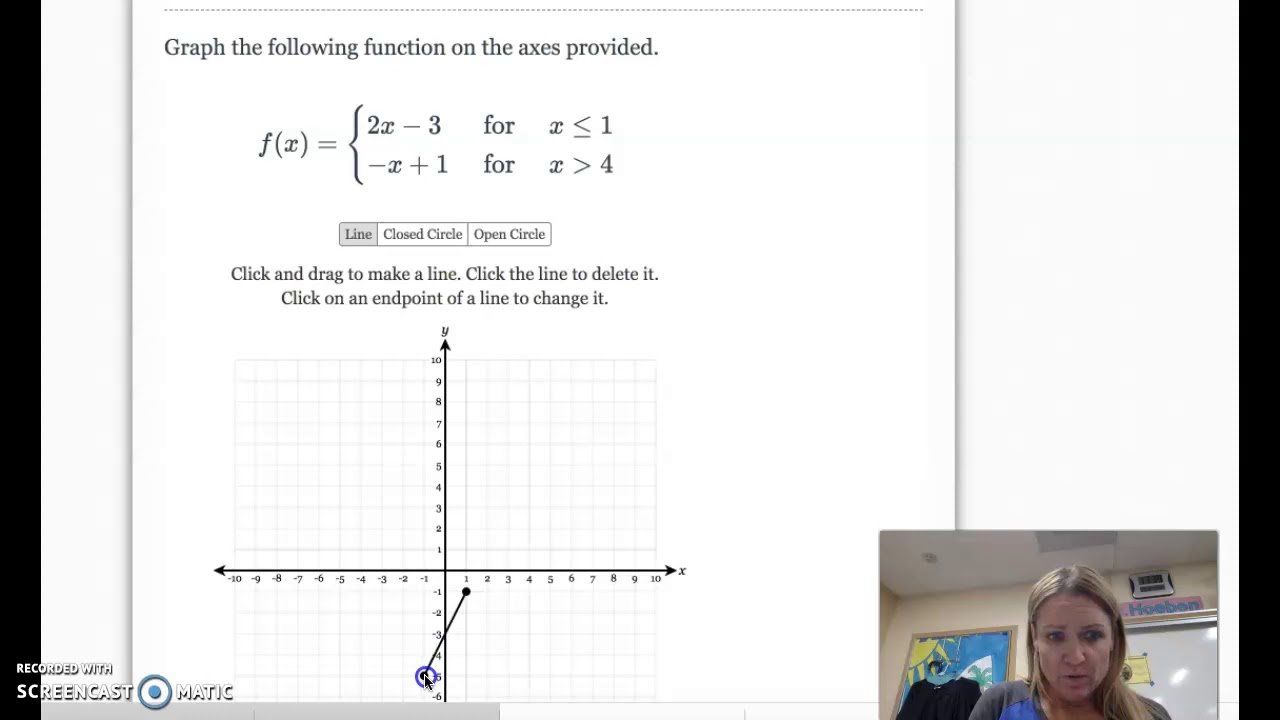
Homework may sometimes be a never-ending job, particularly when you are unable to solve some of the hard questions. You are seated there, turning pages, not knowing what to do. Sounds familiar, right? That is where your Solve My Book Homework Helper comes in as the right answer. Imagine having a smart aid next to you, and it will take you through all the issues. Solve My Book Homework Helper enables one to work on homework faster, with less effort and much less stress.
Solve My Book Homework, Helper? What Is It?
Solve My Book Homework Helper is an online tool or a technique that enables students to have the answers to the questions directly from the textbooks. This method does not require one to guess answers or get confused, as it offers one-step solutions at a time. You do not simply get answers with Solve My Book Homework Helper; you know how to get them.
Reasons Why Students Like This Helper.
Time management and challenging concepts are some of the challenges that students face. Solve My Book Homework Helper is useful in avoiding that pressure. It is a matter of spending hours or even days on a single question to find it answered within minutes. Solve My Book Homework Helper has become the tool of many students to enhance their studying patterns and continue to be at the top.
The working of Solve My Book Homework Helper.
It is not hard to use Solve My Book Homework Helper. You chip in or type in your homework question, and you clearly get a solution. The steps are explicated in a simplified manner, which makes the process of learning more effective. It is similar to having your own tutor at any time you need him/her.
The main advantages of applying this tool.
Solve My Book Homework Helper has several advantages. First, it is a time-saving tool that offers immediate solutions. Second, it enhances accuracy in terms of minimizing errors. Third, it increases confidence due to the familiarity of the process. Solve My Book Homework Helper helps to make the process of studying more effective and fun in general.
How to Reduce Stress in Homework.
Homework is not necessarily stressful. Through Solve My Book Homework Helper, it becomes easy to deal with complicated questions. It divides the large problems into smaller ones, just like converting a large task into small and easy tasks. This will render learning easy.
Marketing for the Common Home.
Minor errors are committed by many learners, such as not understanding the question or missing a step. Solve My Book Homework Helper assists you in preventing such mistakes, as it shows you the proper way of living. This will enhance your performance as well as your knowledge.
Tips to Use It Effectively
Correspondingly, it is better not to answer the questions of Solve My Book Homework Helper and copy the answers. You can spend time knowing each step and attempt to solve similar problems by yourself. It should be a study aid and not a cheat. In that manner, you will be improving your skills in an actual sense.
Homework Helper vs. Old-Fashioned Study Techniques.
The traditional ways of studying may be tedious and even puzzling. Solve My Book Homework Helper, on the other hand, is clear-cut. It is similar to deciding either to do everything by hand or to get a smart tool in the process—you save time and effort and get to learn better.
Conclusion
The world of today is most likely to be rather fast-moving, and smart learning tools are necessary. Solve My Book Homework Helper is not merely completing homework in a hurry, but completing it properly. This tool can make a huge difference, whether you are having some difficulties with difficult questions or simply want to perform better. This is where Solve My Book Homework Helper comes in, so the next time homework becomes too big, know that you can count on Solve My Book Homework Helper to make you a successful student.
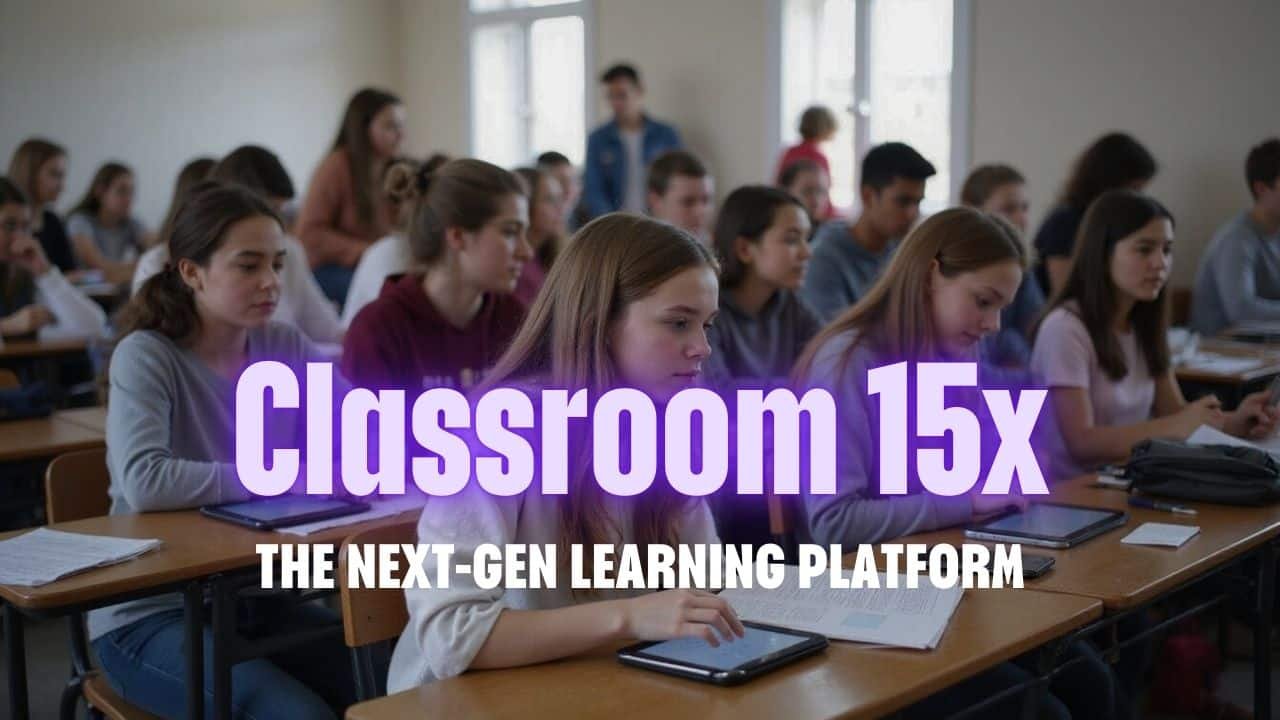
Education has evolved dramatically over the past few decades. With the rapid development of technology, classrooms are no longer limited to traditional chalkboards, textbooks, and face-to-face lectures. Today, digital platforms, interactive tools, and smart learning environments are transforming how students learn and how teachers teach. One concept that has gained attention in recent discussions about modern education is Classroom 15x. This idea represents a new approach to learning environments designed to make education more efficient, engaging, and accessible.
Understanding the Concept of Classroom 15x
Classroom 15x refers to an advanced learning environment that enhances the traditional classroom experience by combining technology, collaboration, and innovative teaching strategies. The “15x” concept symbolizes a significant improvement in productivity, engagement, and knowledge retention compared to traditional classroom settings.
Instead of relying only on lectures and printed materials, a Classroom 15x environment integrates digital learning tools, smart devices, and interactive teaching methods. These elements help teachers deliver lessons more effectively and allow students to learn in ways that suit their individual learning styles.
Key Features of Classroom 15x
A Classroom 15x environment is built on several important features that make it different from traditional classrooms.
1. Smart Technology Integration
Technology plays a central role in Classroom 15x. Smart boards, tablets, laptops, and learning management systems allow teachers to present information in interactive ways. Students can access digital textbooks, watch educational videos, participate in online quizzes, and collaborate on shared projects.
This integration not only makes learning more engaging but also provides students with instant access to information and resources.
2. Personalized Learning
One of the biggest advantages of Classroom 15x is the ability to personalize education. Every student learns differently—some prefer visual learning, while others learn better through practice or discussion.
With digital platforms and adaptive learning tools, teachers can track each student’s progress and provide customized lessons or exercises. This helps students learn at their own pace and ensures that no one is left behind.
3. Collaborative Learning Environment
Collaboration is another key element of Classroom 15x. Instead of focusing only on individual work, students are encouraged to work in groups, share ideas, and solve problems together.
Group discussions, project-based learning, and peer feedback help students develop communication skills, critical thinking, and teamwork abilities. These skills are essential for success in the modern workplace.
4. Interactive Teaching Methods
In a Classroom 15x environment, teachers use a variety of teaching techniques to keep students actively involved in the learning process. These may include:
- Interactive presentations
- Real-time quizzes and polls
- Educational games
- Multimedia lessons
- Virtual simulations
These methods make lessons more engaging and help students understand complex concepts more easily.
5. Data-Driven Education
Another important feature of Classroom 15x is the use of data to improve learning outcomes. Digital learning platforms collect information about student performance, participation, and progress.
Teachers can analyze this data to identify areas where students may be struggling and adjust their teaching strategies accordingly. This approach ensures that teaching methods remain effective and responsive to student needs.
Benefits of Classroom 15x
The Classroom 15x model offers numerous benefits for both students and educators.
Improved Student Engagement
Traditional lectures can sometimes feel repetitive or boring for students. Classroom 15x introduces interactive and multimedia elements that make lessons more exciting. As a result, students are more likely to stay focused and participate actively.
Better Knowledge Retention
Research shows that students remember information better when they actively participate in the learning process. Activities such as discussions, group projects, and interactive quizzes help reinforce key concepts and improve long-term understanding.
Increased Accessibility
Classroom 15x also makes education more accessible. Digital learning platforms allow students to access course materials anytime and anywhere. This is especially helpful for students who need extra time to review lessons or those who cannot attend classes in person.
Enhanced Teacher Support
Teachers benefit from Classroom 15x as well. Technology helps automate tasks such as grading quizzes, tracking attendance, and organizing assignments. This allows teachers to spend more time focusing on teaching and mentoring students.
Challenges of Implementing Classroom 15x
Despite its many advantages, implementing Classroom 15x can present some challenges.
One of the main challenges is the cost of technology and infrastructure. Schools need reliable internet connections, modern devices, and updated software to create an effective digital learning environment.
Another challenge is training teachers to use new technologies effectively. Without proper training, even advanced tools may not be used to their full potential.
Additionally, there is the issue of digital inequality. Not all students have access to personal devices or high-speed internet at home, which can create learning gaps.
The Future of Classroom 15x
As technology continues to evolve, the Classroom 15x concept is expected to grow and improve. Emerging technologies such as artificial intelligence, virtual reality, and augmented reality will further enhance the learning experience.
For example, virtual reality could allow students to explore historical sites, conduct virtual science experiments, or travel through space without leaving the classroom. Artificial intelligence could provide personalized tutoring and instant feedback for students.
These innovations will make education more immersive, interactive, and effective than ever before.
Conclusion
Classroom 15x represents a significant step forward in the evolution of education. By combining technology, personalized learning, collaboration, and data-driven teaching methods, it creates a dynamic environment that supports both students and teachers.
Although there are challenges in implementing this model, the benefits it offers—such as improved engagement, better learning outcomes, and increased accessibility—make it a promising approach for the future of education.
East Mathematics is a term that often sparks curiosity among students, parents, and educators. Whether it refers to a regional education system, a coaching institute, or a distinctive style of learning mathematics, East Mathematics has become associated with strong fundamentals, disciplined practice, and high academic performance.
In today’s competitive academic environment, mathematics is more than just numbers and formulas. East Mathematics represents a structured and thoughtful way of learning that builds long-term understanding rather than short-term memorization. This article explores what East Mathematics means, how it works, and why it continues to gain popularity.
What Is East Mathematics?
East Mathematics generally refers to mathematics education models, teaching methods, or institutions linked to eastern regions or educational philosophies. In many contexts, it reflects the mathematical teaching style seen in East Asian education systems or eastern academic zones where mathematics is treated as a core life skill.
Rather than focusing only on exam scores, East Mathematics emphasizes:
- Concept clarity
- Logical reasoning
- Step-by-step learning
- Continuous practice
This approach ensures students understand the why behind every solution, not just the final answer.
The Learning Philosophy of East Mathematics
One of the most important features of East Mathematics is its learning philosophy. Students are taught to view mathematics as a process, not a shortcut.
The philosophy includes:
- Building strong basics before advanced topics
- Solving problems in multiple ways
- Learning from mistakes
- Revising concepts regularly
This method helps learners develop patience and confidence, which are essential for mastering mathematics.
How East Mathematics Is Taught
East Mathematics is usually taught through a structured and disciplined system. Lessons often follow a clear sequence where each topic connects logically to the next.
Common teaching practices include:
- Concept explanation using examples
- Guided practice sessions
- Regular tests and assessments
- Error analysis and feedback
- Doubt-clearing sessions
Teachers encourage students to ask questions and explore different problem-solving methods instead of memorizing formulas blindly.
Core Subjects Covered in East Mathematics
East Mathematics covers the full range of school and advanced math topics, depending on the level of study. These commonly include:
- Number systems and arithmetic
- Algebra and equations
- Geometry and mensuration
- Trigonometry
- Statistics and probability
- Calculus for higher grades
What sets East Mathematics apart is the depth of coverage. Students don’t move forward until they fully understand the current topic.
Why East Mathematics Is Important
Mathematics plays a major role in academic and professional success. East Mathematics helps learners build skills that go beyond textbooks.
1. Strong Analytical Thinking
Students learn to analyze problems logically, which benefits other subjects as well.
2. Better Academic Performance
A solid math foundation improves results in science, economics, and technology-based subjects.
3. Competitive Exam Advantage
East Mathematics aligns well with entrance exams, Olympiads, and scholarship tests.
4. Confidence Building
When students understand concepts deeply, their fear of math gradually disappears.
5. Career Readiness
Careers in engineering, data science, finance, and research all depend on strong math skills.
Is East Mathematics Suitable for Everyone?
A common misconception is that East Mathematics is only for top students. In reality, it benefits all learners, including beginners and average students.
The key requirement is consistency, not intelligence. With regular practice and proper guidance, any student can improve their mathematical ability using East Mathematics methods.
Challenges Students May Face
Like any structured system, East Mathematics can feel demanding at first. Students may struggle with:
- Increased practice workload
- Slower initial progress
- Concept-heavy lessons
However, these challenges fade as understanding improves. The effort invested early results in long-term success.
Tips to Excel in East Mathematics
To succeed in East Mathematics, students should follow these practical tips:
- Practice math daily, even for short periods
- Focus on understanding concepts clearly
- Revise old topics regularly
- Learn from mistakes instead of ignoring them
- Stay patient and disciplined
Support from parents and teachers also plays a crucial role in maintaining motivation.
FAQs About East Mathematics
What does East Mathematics mean?
East Mathematics refers to mathematics education approaches or institutions that focus on strong conceptual understanding and disciplined learning, often linked to eastern academic traditions.
Is East Mathematics harder than regular math?
It may feel more demanding at first, but it actually makes math easier by strengthening fundamentals.
Can average students succeed in East Mathematics?
Yes. With consistency and guidance, average students can achieve excellent results.
Is East Mathematics useful for competitive exams?
Absolutely. Its problem-solving focus prepares students well for exams that require speed and accuracy.
Can East Mathematics be learned online?
Yes. Many platforms now offer online East Mathematics courses with live classes and practice tests.
Conclusion
East Mathematics is not just a teaching method—it’s a mindset that encourages logical thinking, discipline, and lifelong learning. By focusing on concepts rather than shortcuts, it helps students develop confidence and mastery in mathematics.
Provascin: Uses, Benefits, Ingredients, Side Effects, and Everything

SEO in 2026: Complete Guide to Ranking Websites, Pricing & Real Strategies


